We’re on a mission to raise Foreign Direct Investment by 25% by 2030 but in an increasingly fractured world the city region needs to forge new relationships and drive new deals in new markets.
That’s why Simon Reid and Alice Lamb, from the city region’s Inward Investment team, joined Liverpool Football Club on its recent tour of Hong Kong and Japan as the Premier League Champions’ fame helped put the city region’s cultural, innovation, education and industrial strengths in the spotlight.
Assistant Director of Business Growth Simon takes up the story…
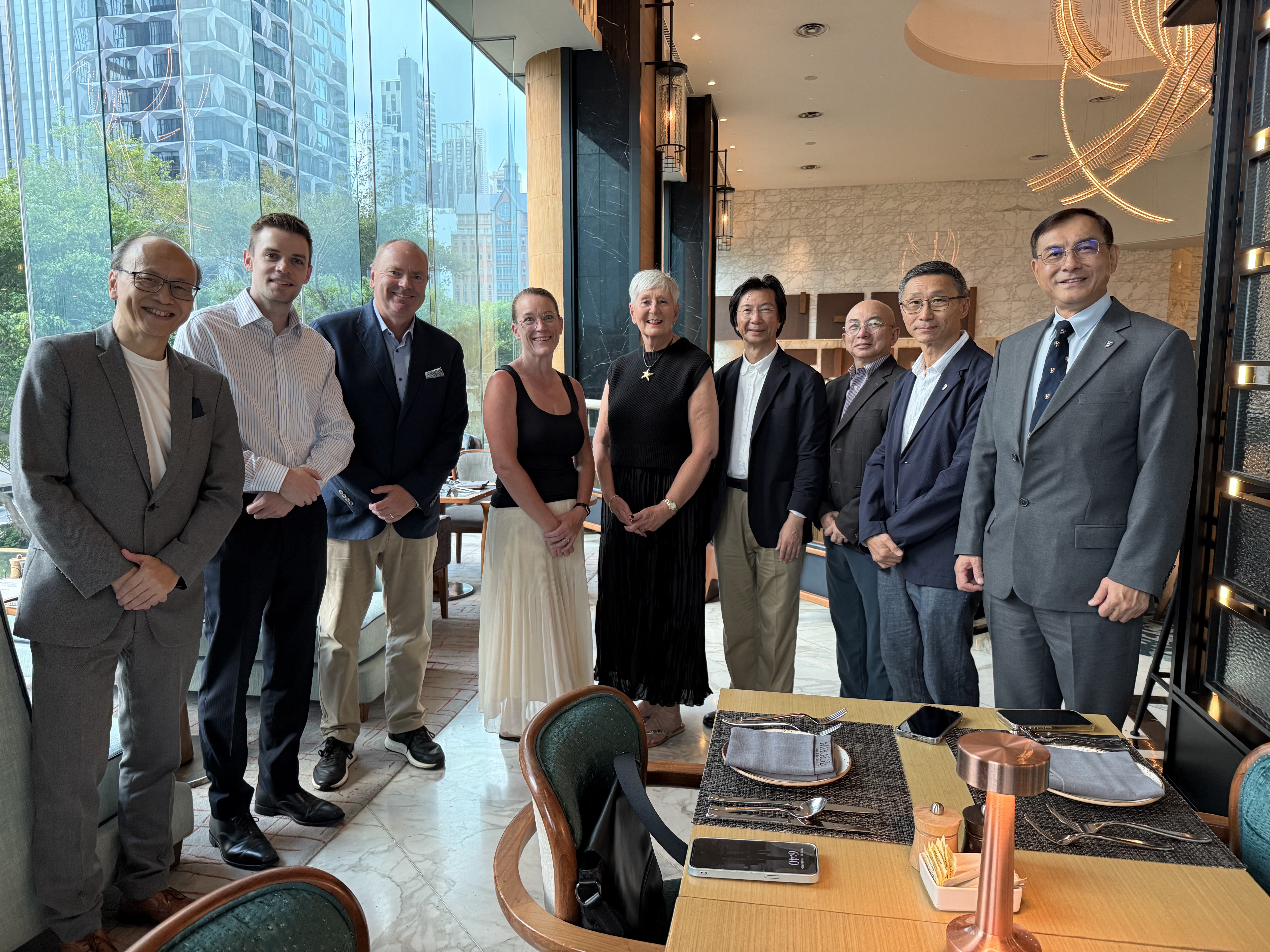
Simon Reid, third from left, and Alice Lamb, centre, with members of the University of Liverpool Alumni Association in Hong Kong
The English Premier League (EPL) is enjoying unprecedented global growth – mainly in TV rights sold internationally and increasingly social media. That is particularly evident in Asia where the sport is seeing an exponential upturn in viewing figures – at a time when Liverpool FC are riding the crest of a wave as champions.
For many years sports across the world have looked enviously at the Premier League, which was the first establish commercial ties in Asia in the 1990s.
Its competitiveness, distinct fan culture and association with the English language have all contributed to it becoming the most-watched sports league in the world, attracting a combined viewership of 3.2bn globally.
Half of the global fanbase and a quarter of the television audience, the Premier League says, is in Asia-Pacific – despite games often finishing in the middle of the night.
As Liverpool Football Club’s exposure increases, so does exposure for the place the club calls home – including the wider city region. I was shocked at how little understanding there was of the UK outside London, however everyone we met had heard of Liverpool – if not for football, for The Beatles, but often both.
The job of the Combined Authority’s Inward Investment Service is to expand Liverpool’s global recognition to include the city region’s other areas of uniqueness and specialisation: life sciences, advanced manufacturing, creative industries, maritime, professional services, our rich cultural and visitor offer, talent and education and the great lifestyle on offer here.
Those things are not well understood yet – but they will be.
However, it’s not simply about leveraging the Liverpool brand, it’s about why Asia is so important to the city region. Asia’s economy, despite economic headwinds, is growing at 4.6% annually, according to the IMF, and after Australia, Hong Kong and Japan are at the top of those growth lists. Their economies are significantly outpacing Europe, and in the US – which has long been the city region’s largest source of FDI – there are high-profile challenges and volatility, despite the strength of existing trading relationships.
So, while the US will always be incredibly important, the city region needs to forge its own links elsewhere, and in terms of investment (in the city region’s infrastructure, companies or property) and foreign direct investment (companies relocating or setting up operations here), the strength of the Asian economy offsets the challenges in other markets.
Put simply, brand recognition – and in this case Liverpool Football Club – equates to economic opportunity for the whole city region in the form of access to capital and investor sentiment.
The whirlwind 10-day trip started in Hong Kong with a visit to the main ‘fan experience’ zone, put on by Liverpool FC and Carlsberg – a smart waterfront location where an estimated 20,000 (mainly Chinese) holidaymakers pass through every day. With its almost life size replica of the Shankly Gates, a ‘You’ll Never Walk Alone’ plinth and a Junk floating in the harbour with full LFC branding on its sails, the zone is perfect for social media. And then there’s the club’s new Hong Kong shop – their 20th globally, more than any other sports club in the world.
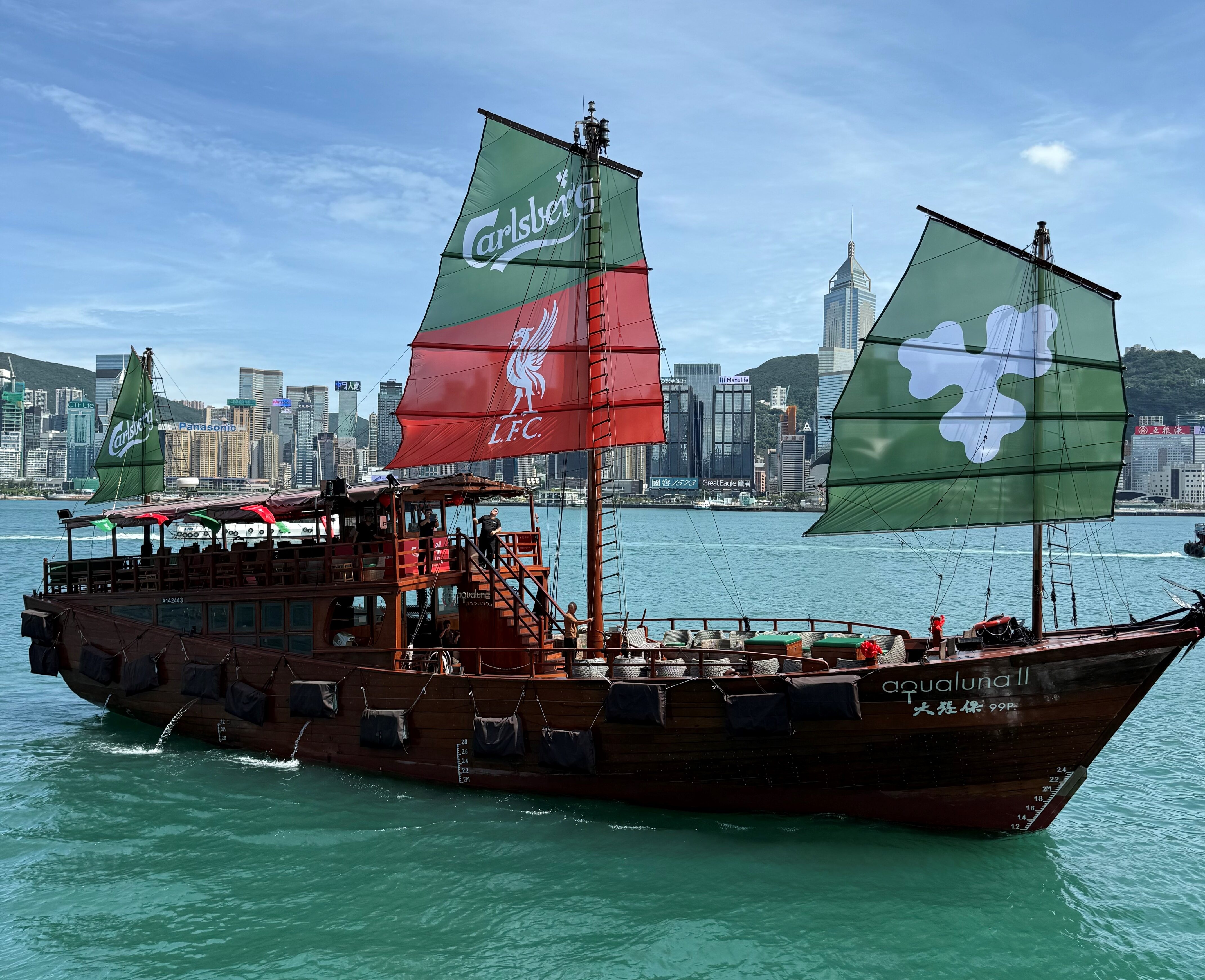
A Liverpool Football Club branded boat in Hong Kong harbour
After checking out Liverpool FC’s impressive display, the real work began.
As we found in last year’s US trade mission that helped secure Kyndryl’s massive investment in the city region, driving FDI is about relationships. It’s about meeting the right people and instilling the knowledge that our city region is not just world famous, it’s world leading in many fields and is primed for investment.
We met British Embassy staff in Hong Kong, who helped curate the visit, to articulate the city region’s proposition and the role it plays in supporting the Government’s Modern Industrial Strategy and sector plans. This was followed by a round table with businesses and the Hong Kong Chamber of Commerce to explore potential synergies and future opportunities, leading to a number of leads.
Bilateral meetings were also held, including with Hong Kong’s rail system, MTR, that allowed us to see first-hand their business model and some of their developments in the context of plans for Liverpool’s Central Station and other city region transport infrastructure projects. A dinner was hosted by the very helpful University of Liverpool Alumni Association in Hong Kong – which will be critical in developing future networks. And we attended a Liverpool FC reception event and the game against AC Milan where talks continued with Embassy colleagues and business contacts, including representatives from Halton-based Liverpool ChiroChem, which has Chinese ownership.
Hong Kong conversations revealed an appetite for investment in the UK, especially in technology businesses, and while the gaze appeared to be very much on London, a well-developed and costed investment proposition would be of great interest. The city region now has a platform to build on and personal connections have been made.
After a four-and-a-half-hour flight, we moved on to Tokyo, armed with our Invest Liverpool City Region brochure translated into Japanese. The contrast was immediate. Hong Kong still feels very British: most people speak English, street signs are bilingual, and the business community feels like home. In Japan, we found a country that is fascinating and welcoming but with a very different identity.
We were plunged straight into an evening reception at the British Embassy to welcome Liverpool FC and one of their principal sponsors Japan Airways. If the club were big in Hong Kong, it’s off the chart in Japan. Liverpool FC is officially the most supported team in Japan –helped by Japan’s answer to David Beckham, Wataru Endo, playing for the Reds. The Embassy had literally rolled out the red carpet.
British Ambassador to Japan, Julia Longbottom, gave a speech in Japanese to welcome the club and their guests, followed by words from LFC Chief Executive Billy Hogan. The reception was a chance to meet Embassy staff and in particular the incoming Head of Investment for the UK Government in Japan, Robin Walker.
Having an established network in Japan is critical to attracting investment, so the following day was taken up with meetings with trade associations working hard to link UK companies with investment and trade opportunities in Japan. At Liverpool’s final match in Yokohama, we met with Japanese representatives of city region companies NSG Pilkington and Brother Industries (Inks), which have facilities in St Helens and Sefton respectively.

Liverpool Football Club staff with children during the club’s 2025 summer tour of Hong Kong and Japan
Then it was the long flight home and plenty of time to reflect on a trip packed with meetings and illuminated by new ideas and new contacts.
We knew Hong Kong would be an investor-led market, but it was much more open and curious than anticipated – particularly regarding technology companies and capital investment. Chinese money dominates which has its geopolitical challenges, but which is also already benefiting the city region with the likes of Pharmaron in Speke and Liverpool ChiroChem helping grow our economy.
Japan appears much more an FDI market. Japanese investment decisions move slowly, are based on significant detailed interactions, and above all trust. Everyone told us Liverpool has great brand recognition in Japan but to leverage it you need someone in market plus time and patience. This is something we will have to evaluate – but the size of the prize is significant. We learned that Japanese investment patterns follow well-trodden paths and they invest for the long term – something the city region has seen with Sony PlayStation, NSG Pilkington and Brother Industries, who have built a new factory in Bootle.
We know we have a great story to tell, and a great start has been made telling it but there’s still lots to do. As geopolitics shifts and old certainties are lost, it is important the Combined Authority casts a wide net in the investment world and develops credibility in other markets.
There will be more to come because no country, or city region, can ever walk alone.