Canal water to heat some of Liverpool’s most famous buildings in hi-tech carbon-cutting scheme
Canal water to heat some of Liverpool’s most famous buildings in hi-tech carbon-cutting scheme
Wednesday 8 October 2025EnergyGeneral NewsEstimated Read: -- min
Energy generated from Leeds and Liverpool canal by one of the UK’s largest water source heat pumps
Announcement comes as Mersey Heat Energy Centre officially opens
Scheme to connect Georges Dock, Cunard and the Museum of Liverpool buildings to Mersey Heat Network
Joint project between Combined Authority, Liverpool City Council and National Museums Liverpool
Key part of Combined Authority plan to reach net zero by 2035
Three major public buildings on Liverpool’s waterfront are to slash carbon emissions by joining a heat network driven by energy from canal water.
Under the plan, an extended pipeline will connect Georges Dock building, the Cunard building, and the Museum of Liverpool, part of National Museums Liverpool (NML), to the Mersey Heat network.
The newly opened Mersey Heat Energy Centre is already supplying the Liverpool Waters site, the Titanic Hotel and the Tobacco Warehouse apartments.
It uses one of the UK’s largest water source heat pumps to extract energy from the Leeds and Liverpool Canal to power a network of heating pipes.
The project is the latest in the Liverpool City Region’s five-year carbon action plan and journey to reach net zero. The Combined Authority has recently secured an additional £35m to decarbonise dozens of other public buildings from the Department of Energy Security and Net Zero.
Cllr Anthony Burns, Liverpool City Region Cabinet Member for Net Zero, and Councillor Liam Robinson, Cabinet Member for Innovation, joined representatives from Ener-Vate and contractor Vital Energi to mark the launch of the Mersey Heat Energy Centre last week.
Cllr Anthony Burns, Liverpool City Region Cabinet Member for Net Zero and Leader of St Helens Council, said:
“Building a cleaner, greener future isn’t just about meeting targets – it’s about improving people’s lives. The Mersey Heat Energy Centre is a fantastic example of how we can use our region’s strengths and ingenuity to cut carbon, lower energy bills, and support jobs in the industries of the future.
“I know the scale of the challenge we’re facing – but also the scale of the opportunity. Projects like this show that we’re serious about hitting our target to be net zero by 2035, at least a decade ahead of the rest of the country, and that the Liverpool City Region is leading the way.”
Councillor Liam Robinson, Cabinet Member for Innovation and Leader of Liverpool City Council, said:
“The launch of the Mersey Heat Energy Centre is a landmark moment in Liverpool City Region’s journey towards a cleaner, greener future.
“It is a visible example of how we are leading the way on low carbon infrastructure, protecting historic buildings, cutting emissions and creating long term green value for our communities.
“Liverpool has long been a leader in climate action, and this project reinforces our commitment to achieving net zero. It’s not just about infrastructure, it’s about creating a legacy of sustainability that benefits our communities, our economy, and our environment.
“I’m proud to see this vision and investment come to life, creating jobs in the emerging green economy. I want to thank all the partners involved for helping Liverpool take another bold step towards a low carbon future.”
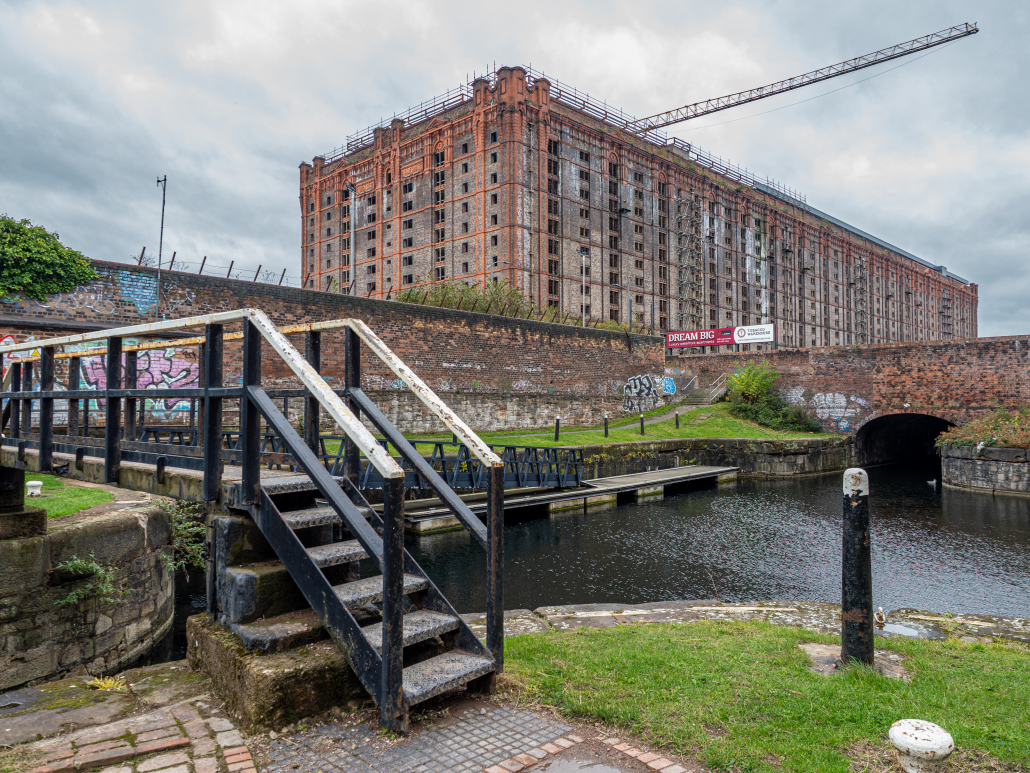
Leeds and Liverpool Canal with Tobacco Warehouse
Laura Pye, Director of National Museums Liverpool said:
“We are pleased to be taking a positive step forward in our own decarbonisation goals and joining the heat network, which will make Museum of Liverpool one of Liverpool’s public buildings committed to helping the Liverpool City Region become net zero by 2035.”
David Tatton, Investment Director, Peel Group, said:
“Mersey Heat represents Peel Group’s long-standing commitment to investing in Liverpool. This project has been in development for several years and is now a flagship example of low-carbon innovation in the UK. We’re proud that Mersey Heat has the capacity to support the city’s ambitious climate goals, and we’re delighted to have the backing of Liverpool City Council, the Liverpool City Region and the Mersey Pension Fund via its Catalyst Fund.”
One of the UK’s largest water source heat pumps at the heat centre.
Private homes account for the majority of carbon emissions while public buildings are responsible for 13% of the total. Together, the city region’s six local authorities and the Combined Authority own more than 600 buildings that emit almost 77,000 tonnes of CO2 each year.
This year, the North West secured almost £117m from the Public Sector Decarbonisation Scheme Wave 4 – more than Greater London and the biggest national award.
The Combined Authority plans to use the recent award of £35m – the biggest single project in the country – to retrofit energy-saving measures in dozens of public buildings including historic town halls, art galleries, libraries and leisure centres. A variety of measures will replace fossil fuel heating in each building with low carbon alternatives, such as heat pumps and solar panels.
Similar Articles
Liverpool City Region secures £80m to make 10,000 homes warmer, more energy efficient and cheaper to heat